
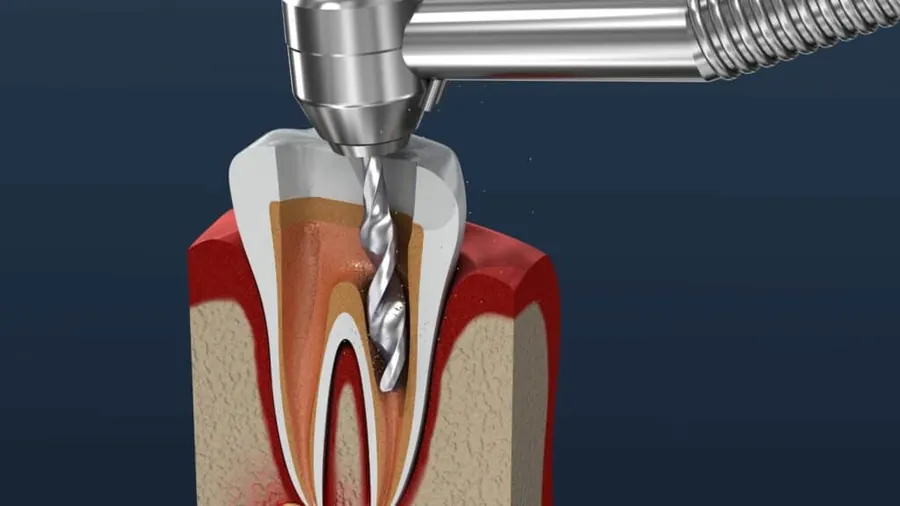
What is re-root canal treatment?
If a tooth that has already had root canal treatment becomes tender again, or if a radiograph shows that healing has not taken place as expected, the tooth may need to be treated again. This is called re-root canal treatment, or endodontic retreatment.
Retreatment means reopening the tooth, removing the existing root filling material, cleaning and disinfecting the canal system once more, and then sealing it again. It is a more involved procedure than a first root canal treatment because old filling material, posts or restorations may need to be removed first.
Not every failing tooth can be retreated, and not every retreated tooth will succeed. Your dentist will assess the tooth, explain the likely chances in your case, and discuss the alternatives — including extraction and replacement — so that you can decide.
Who may need this treatment
Retreatment may be considered when:
- A treated tooth becomes painful or tender again, sometimes months or years later.
- The gum near a treated tooth swells, or a sinus tract or abscess appears.
- A radiograph suggests infection around the root that has not resolved.
- A treated tooth never became fully comfortable.
- The previous root filling does not appear to seal the full length of the canal.
- A new cavity or a leaking old restoration has allowed bacteria back into the tooth.
The treatment process
Reassessing the tooth
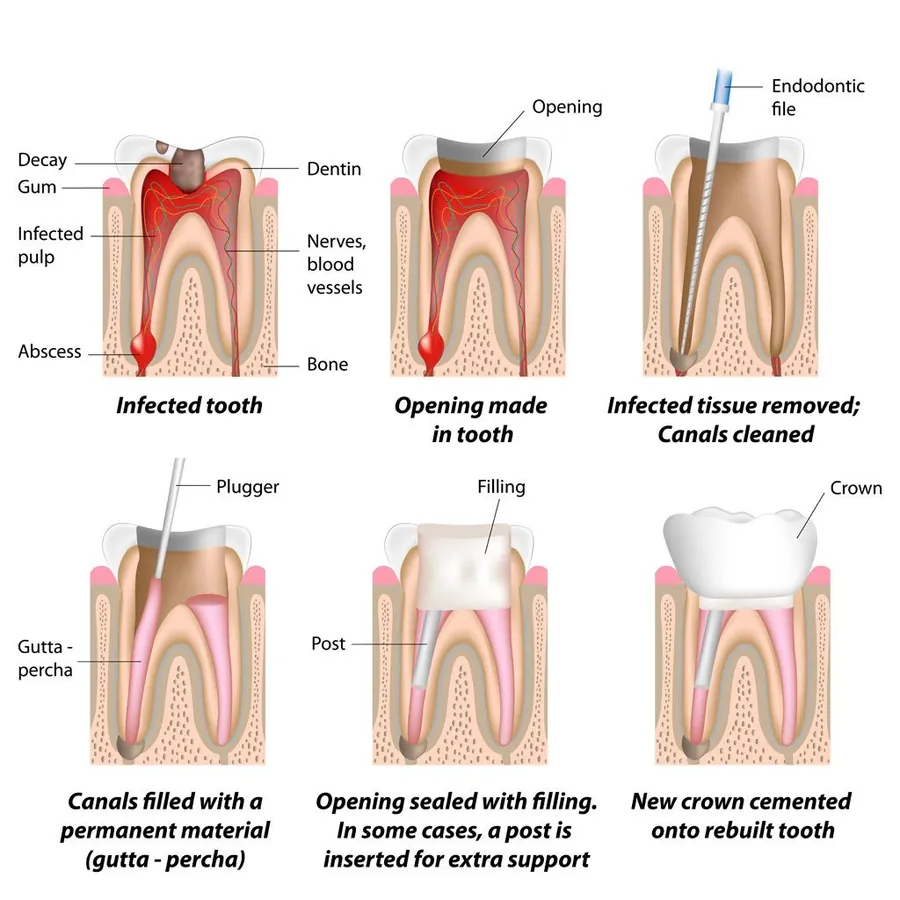
The history of the tooth is reviewed, and it is examined and imaged again. The dentist looks for a crack, a leak, untreated canal space or infection around the root.
Removing the existing restoration
The crown, filling or post may need to be removed or bypassed to reach the canal system again. This step influences what the final restoration will need to be.
Removing old root filling material
The previous filling material is taken out of the canals, sometimes with heat, solvents or ultrasonic instruments, so the canal can be worked on again.
Cleaning, disinfecting and resealing
The canals are re-cleaned, shaped and disinfected, then refilled and sealed. Extra appointments with medication inside the tooth may be needed.
Re-restoring the tooth
The tooth is rebuilt, usually with a new restoration, and often with a crown for protection.
Benefits of treatment
Keeping your own tooth avoids the loss of bone and bite support that follows extraction.
Removing the source of bacteria from inside the tooth addresses the reason symptoms have returned.
Retreatment can preserve a tooth and its existing root structure rather than starting over with a replacement.
Even when retreatment is not advisable, the assessment clarifies whether an extraction or an alternative plan is the better route.
Finding out why the first treatment needs help
Retreatment begins with diagnosis. The dentist looks for the specific reason the tooth has not settled: a missed canal, an incomplete seal, a leak through a failing restoration, a crack, or bacteria that survived inside a complex canal system.
Imaging at different angles, magnification and careful inspection under good light all help. Locating the cause changes the plan — a leaking filling is not treated the same way as an untreated canal.
- Detailed radiographic review of the existing root filling
- Assessment of the restoration and any post in the canal
- Magnification to locate missed or complex canal anatomy
- An honest discussion if the tooth is not a good candidate
A predictable, explained process
Comfort is a clinical decision, not a courtesy — it shapes how treatment is planned and how it is carried out.
Questions About Re-Root Canal Treatment
The questions patients ask most often about this treatment, answered directly.
How do I know if retreatment is needed?
Recurring pain, tenderness on biting, gum swelling or a sinus opening near the tooth are the usual signs — but the decisive information comes from an examination and radiographs. Some failing root canals produce no symptoms at all and are found on routine imaging.
Is retreatment more difficult than the first treatment?
Generally yes. Existing filling material, posts and crowns can make access harder, and the canal walls may already be thinner. That is why retreatment is planned with additional time and often with magnification.
What if the tooth cannot be retreated?
Sometimes a crack, a root fracture or insufficient remaining tooth structure makes retreatment unwise. In that case your dentist will discuss extraction and the replacement options available to you.
Can retreatment be done through my existing crown?
Sometimes access can be made through a crown, and sometimes the crown needs to be removed or replaced. This depends on the crown, the tooth and the canal anatomy, and is decided during assessment.