
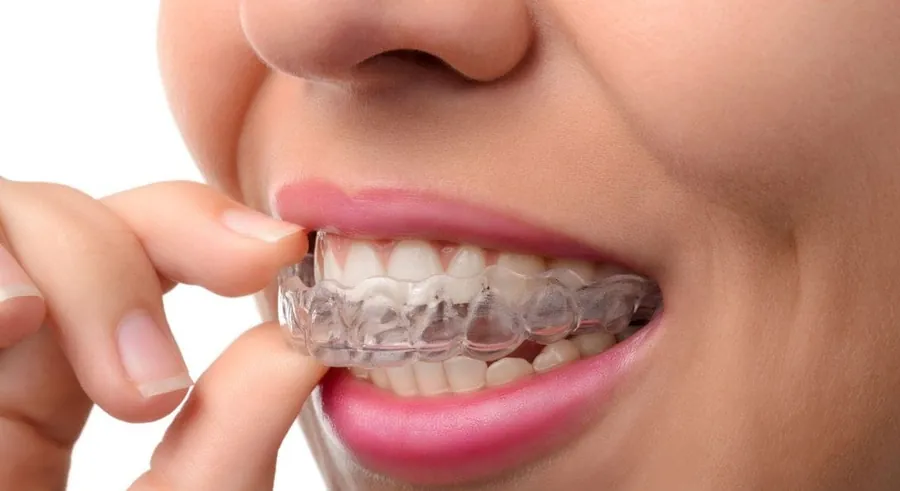
What does orthodontic treatment address?
Orthodontics deals with two related things: the alignment of the teeth within each jaw, and the relationship between the upper and lower jaws when they close. Crowding, spacing, rotations, protrusion and a mismatched bite are all corrected by moving teeth through bone that remodels in response to gentle pressure.
Some cases involve growth guidance in younger patients, where the jaws are still developing. In adults, where growth is complete, orthodontics still works — the bone around teeth continues to remodel throughout life — but treatment may need to be combined with other dental work to produce a stable result.
Orthodontic correction is often undertaken for appearance alone, and that is a legitimate reason. It also has functional consequences: well-aligned teeth are simpler to clean, and a balanced bite spreads chewing forces more predictably.
Who may need this treatment
An orthodontic assessment may be worthwhile when:
- Teeth appear crowded, rotated or overlapping.
- There are gaps between teeth that were not intended.
- The upper front teeth protrude noticeably, or the lower teeth bite in front of the upper.
- The bite feels uneven, or one side contacts before the other.
- Cleaning is difficult because teeth overlap, and decay or gum problems recur.
- A tooth is missing and the space needs to be closed or managed.
The treatment process
Examination and records
Radiographs, clinical photographs, bite records and a scan or impressions are taken. These record the starting condition and allow the movement plan to be worked out precisely.
Diagnosis and treatment plan
The cause of the problem is identified and the options are discussed — including the possibility that orthodontics alone will not achieve the result, and that other treatment is needed alongside it.
Appliance placement
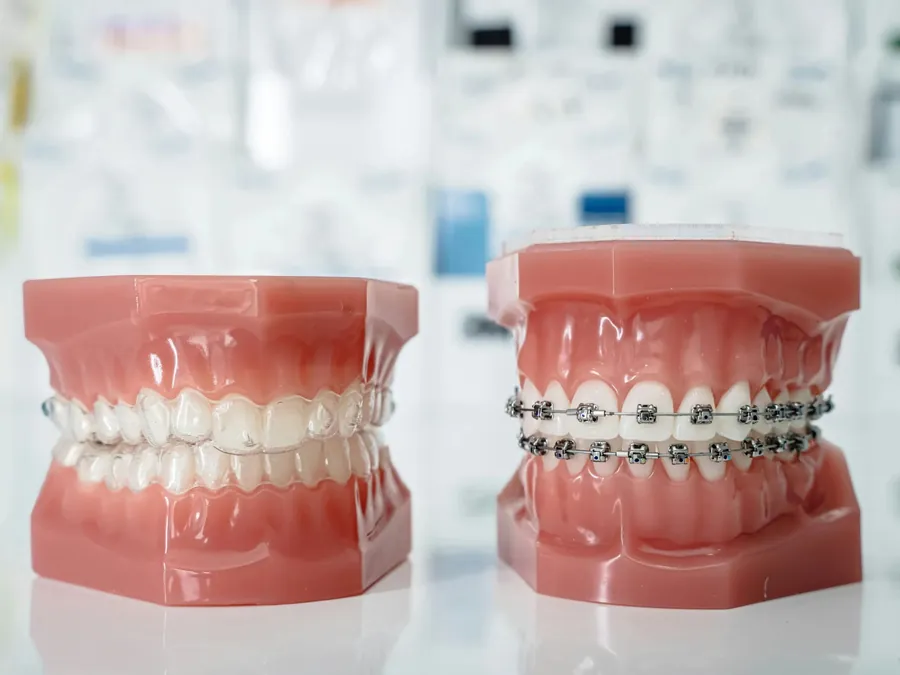
Fixed braces, clear aligners or another appliance are fitted, and the sequence of visits for adjustments is explained.
Active treatment and review
Teeth are moved in stages with regular reviews. Progress is checked against the plan, and the appliance is adjusted or the next aligners issued.
Debond and retention
Appliances are removed when the planned positions are reached, the teeth are polished, and retainers are provided and checked for fit.
Long-term monitoring
Retainers are reviewed, because teeth settle and can drift. Ongoing retention protects the result you have invested months in.
Benefits of treatment
Overlapping teeth hide plaque. Straightening them makes both brushing and flossing more effective.
When upper and lower teeth meet properly, chewing forces are distributed across the arch rather than concentrated on a few teeth.
Alignment is one of the most noticeable improvements available in dentistry, and it changes how patients feel about their smile.
Aligned teeth make restorations, bridges and implants simpler to plan and often more conservative.
Adults can and do have orthodontic treatment; the mechanics differ, but tooth movement works the same way.
Records, planning and monitoring
Orthodontic precision comes from record-taking and review discipline. Radiographs show root position and bone support; photographs document the starting appearance; scans or impressions give an exact record of the crown shapes that the appliance will grip.
The movement plan is then worked out tooth by tooth. At each review, the actual position is compared against the plan. If a tooth is not tracking, the cause is identified — a broken bracket, insufficient wear time, or an obstruction — and dealt with before the next stage.
- Radiographic assessment of roots and bone before treatment
- Photographic and digital records for objective progress comparison
- Movement planned stage by stage, not adjusted ad hoc
- Tracking checked at every review visit
- Retainer fit verified after the appliance is removed
Living with orthodontic treatment
Comfort is a clinical decision, not a courtesy — it shapes how treatment is planned and how it is carried out.
Questions About Orthodontics
The questions patients ask most often about this treatment, answered directly.
Am I too old for orthodontic treatment?
No age limit applies to moving teeth, provided the gums and bone supporting them are healthy. In adults, treatment may need to be combined with other dental work, and the plan is adjusted accordingly.
Is orthodontics only for appearance?
No. Alignment affects how easy teeth are to clean and how biting forces are distributed. Many patients also report that the aesthetic change is what motivated them in the first place.
Can orthodontics fix my jaw relationship?
In growing patients, some jaw relationships can be guided. In adults, correction of skeletal discrepancies may require a combined approach with other specialists or, in marked cases, surgical treatment. Your dentist will be clear about what orthodontics alone can do in your case.
What happens after the braces come off?
Retainers are fitted and monitored. Teeth naturally drift with age and after treatment, so retention is what protects the result. It is part of orthodontic treatment, not an optional extra.