
What is a dental implant?
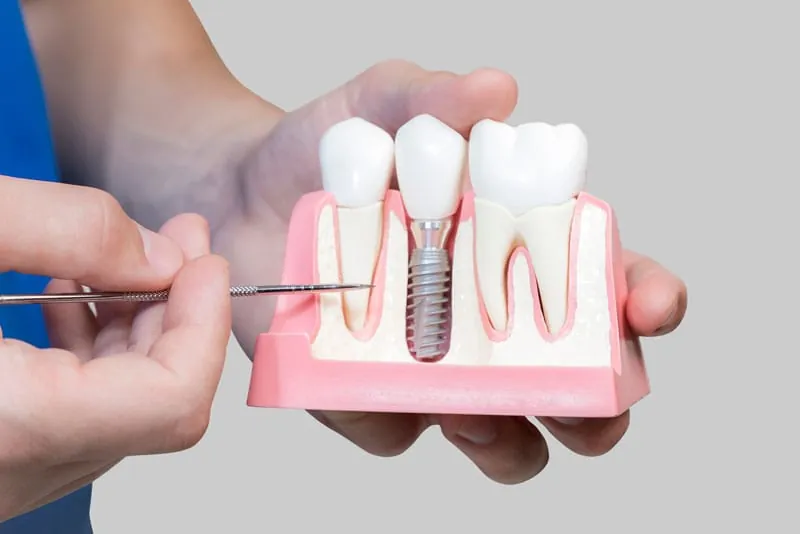
A dental implant is a small screw-shaped component, usually made of titanium, that is placed into the jaw bone where a tooth has been lost. Over the following weeks and months the bone grows closely against the implant surface, holding it firmly — a process called osseointegration. Once the implant is stable, it can carry an artificial tooth.
Because the implant stands in for the root, the replacement tooth does not rely on the neighbouring teeth for support. That is one of the reasons implants are used to replace single teeth, several teeth or a full arch, and to hold dentures securely in place.
Placement is a minor surgical procedure carried out under local anaesthesia. Modern planning uses imaging and, where helpful, a surgical guide so that the implant is positioned according to the bone available and the shape of the final tooth.
Who may need this treatment
Implants may be considered when:
- One or more teeth have been lost, whether recently or long ago.
- A single tooth is missing and the adjacent teeth are healthy and should not be cut down for a bridge.
- A denture is loose, uncomfortable or moves while eating and speaking.
- Teeth are missing at the back of the mouth where chewing function matters most.
- A tooth cannot be saved and the alternative to replacement needs to be planned.
- Existing dental work needs to be replaced with a fixed solution.
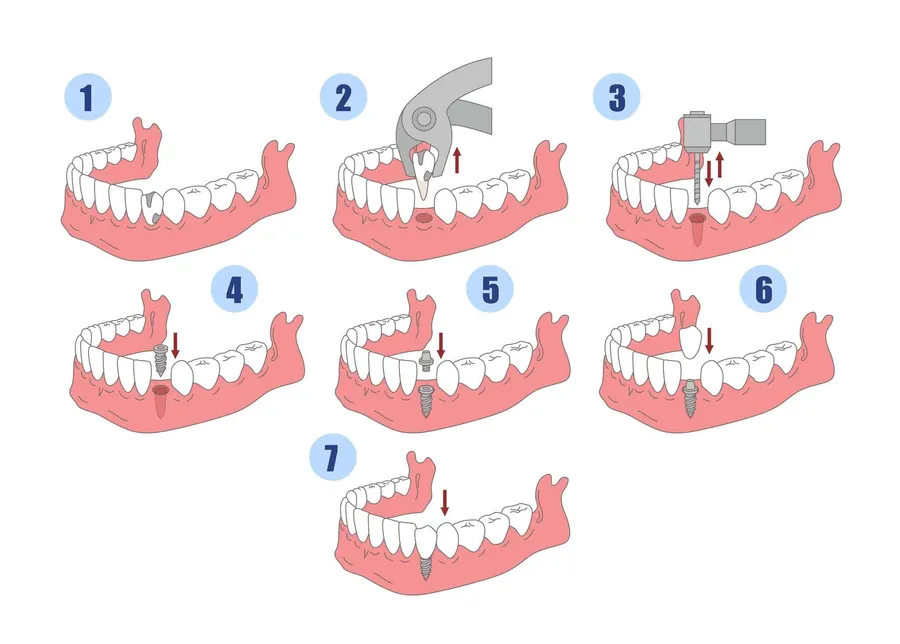
The treatment process
Assessment and planning
Clinical examination, radiographs and, where needed, a scan or study models establish bone volume, the position of nerves and sinuses, gum condition and the bite. The number and position of implants is planned around the final teeth.
Preparing where necessary
Sometimes treatment such as extraction of an unsalvageable tooth, gum care or bone grafting must be completed first, with a healing period before implant placement.
Implant placement
The implant is placed into the bone under local anaesthesia. It is a controlled procedure; most patients return to ordinary activities the same day, with aftercare instructions.
Healing
The implant is left undisturbed while the bone integrates with it. During this period a temporary tooth or a modified denture may be worn so you are not left with a visible gap.
Fitting the final tooth
Once healing is confirmed, an abutment is attached to the implant and the final crown, bridge or denture is made and fitted. The fit, shade and bite are checked carefully.
Review and maintenance
Implants are reviewed and cleaned like natural teeth. Good daily cleaning and regular professional review are what keep an implant healthy in the long term.
Benefits of treatment
A crown made to match your other teeth restores the appearance of the missing tooth without drawing attention to it.
Because the implant is fixed in the bone, force is transmitted to the jaw much as it is by a natural tooth.
A single implant does not require cutting down healthy teeth on either side, as a conventional bridge does.
Bone that would otherwise shrink after tooth loss is kept working by the load transmitted through the implant.
A fixed replacement for a missing tooth supports speech and appearance, and removes the concern of a denture moving at the wrong moment.
Planning the tooth before placing the implant
The outcome of implant treatment depends heavily on planning. The position of the implant is worked out backwards from the final tooth: where the crown needs to sit, and therefore where the implant must be, in the bone that is actually available.
Radiographs and scans define bone height and width and show the position of the inferior alveolar nerve or the maxillary sinus. A surgical guide, derived from a scan and the planned tooth position, can transfer that plan to the mouth with high accuracy. Sterile, single-use handpieces and components are used at placement.
- Bone volume and nerve position assessed before treatment
- The final tooth design decided before the implant is placed
- Guided placement where the site and plan allow
- Torque and stability checked at placement
- Staged healing verified before the final restoration
What to expect, and how discomfort is managed
Comfort is a clinical decision, not a courtesy — it shapes how treatment is planned and how it is carried out.
Questions About Dental Implants
The questions patients ask most often about this treatment, answered directly.
Does implant placement hurt?
Placement is carried out with local anaesthesia. Most patients describe the days afterwards as involving tenderness and swelling rather than sharp pain, and this is managed with ordinary medication and cold packs. Your dentist will give you specific instructions.
How long does the whole treatment take?
It depends on healing and on whether preparation such as grafting is needed. Implants are typically left to integrate for a number of months before the final tooth is fitted. Your dentist will set out a timeline for your case at consultation.
Am I too old, or is my bone too thin, for implants?
Age by itself is not the deciding factor — general health, gum condition and bone volume are. Where bone is insufficient, grafting or shorter implants may be options. Sometimes an implant is not the right solution, and that will be discussed honestly.
How do I care for an implant?
Implants are cleaned like teeth, with attention to the gum margin, and are checked professionally at intervals. Smoking and untreated gum disease are the main threats to long-term implant health.