
What is a fixed dental bridge?
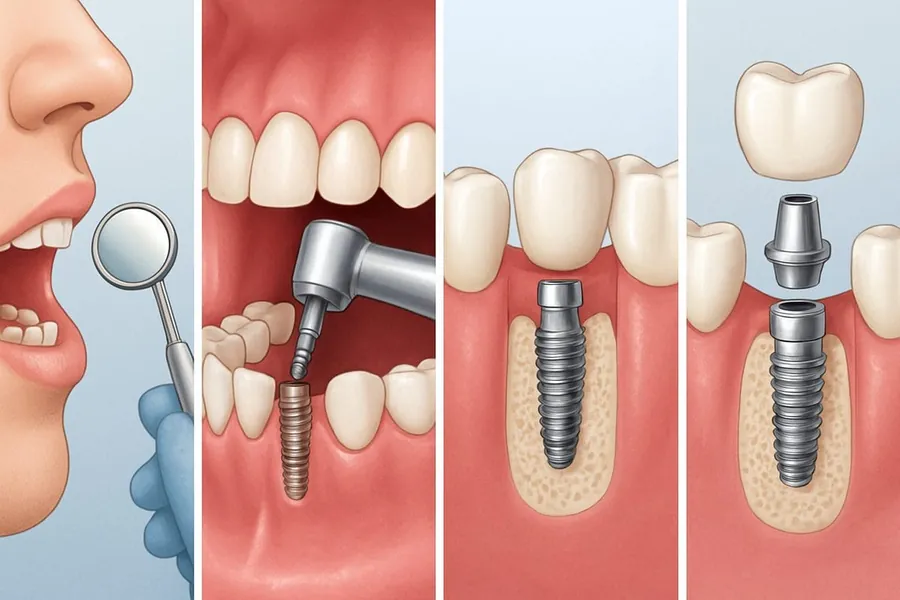
A bridge fills the space left by missing teeth. In a conventional bridge, the replacement tooth is joined to crowns fitted on the teeth on either side of the gap. In an implant-supported bridge, the replacement teeth are attached to implants placed in the jaw instead.
Once cemented or screwed into position, a bridge does not come out. That is the central difference between a bridge and a removable denture, and it is why many patients prefer a fixed solution for appearance, speech and chewing.
There is also a removable but precisely fitting option — a partial denture — which is used when fixed treatment is not suitable. The choice depends on which teeth are missing, the health of the supporting teeth and bone, and the patient's preference.
Who may need this treatment
Fixed replacement may be considered when:
- One or more teeth are missing and the gap is visible or affects chewing.
- Adjacent teeth already carry large restorations and would benefit from being crowned.
- A denture is unstable or uncomfortable and a fixed option is possible.
- Missing teeth have allowed neighbouring teeth to drift or the bite to change.
- An implant-supported replacement is preferred to avoid preparing healthy adjacent teeth.
- Speech or appearance is affected by the gap.
The treatment process
Assessment and planning
The teeth on either side of the gap are examined, their roots and bone assessed, and the bite recorded. The design of the bridge, and the material for it, are decided.
Preparing the supporting teeth
Where a conventional bridge is planned, the supporting teeth are shaped under local anaesthesia to make room for the crowns that will hold the bridge.
Records and impressions
Accurate impressions, bite records and a shade match are taken so that the bridge fits the prepared teeth and matches your other teeth.
A temporary bridge
A provisional bridge is usually worn while the final one is made, so you are not left with exposed prepared teeth or a visible gap.
Fitting the final bridge
The finished bridge is checked for fit, contacts, bite and appearance, adjusted if necessary, and then cemented or secured to the implants.
Cleaning instruction and review
You are shown how to clean under and around the bridge, since this area needs specific attention. Review visits protect the long-term health of the supporting teeth.
Benefits of treatment
Nothing has to be taken out at night or before eating.
The gap is filled with teeth matched to the shade and shape of your own.
Replacing missing teeth restores the surfaces your bite depends on and helps speech sound natural again.
Filling the gap reduces the drifting and over-eruption of neighbouring teeth that follows tooth loss.
Where implants are used, healthy adjacent teeth do not need to be prepared.
Fit, shade and bite checked at every stage
A bridge depends on fit. If the margins are not precise, bacteria can get underneath, and if the bite is not balanced, the supporting teeth carry force unevenly. Both are checked deliberately — at impression stage, at try-in and at final cementation.
Material choice is made for the situation. All-ceramic or zirconia restorations are often used where appearance matters most; metal-ceramic restorations remain a durable option for load-bearing back teeth. Your dentist will explain the trade-offs for your case.

- Impression and bite records taken with the gap and neighbours recorded
- Shade matched to your natural teeth under clinical light
- Fit, margins and contacts verified before cementation
- Bite adjusted so load is shared evenly
Comfort through the whole sequence
Comfort is a clinical decision, not a courtesy — it shapes how treatment is planned and how it is carried out.
Questions About Fixed Teeth / Bridge
The questions patients ask most often about this treatment, answered directly.
How is a bridge different from a denture?
A bridge stays in the mouth and is not removed; a denture is taken out for cleaning and at night. Bridges also depend on supporting teeth or implants, while dentures rest on the gums and any remaining teeth.
Will the supporting teeth be damaged?
Preparing a tooth for a crown removes some of its outer structure permanently. That is why the decision is considered carefully, and why implant-supported options are discussed when the adjacent teeth are completely sound.
How long does a bridge last?
Longevity depends on the health of the supporting teeth, gum care, the bite and your cleaning habits. Regular review lets problems at the margins or in the supporting teeth be found early, while they are still straightforward to manage.
Can a bridge be repaired?
Small chips, worn surfaces or a loosened section can sometimes be dealt with. If the supporting tooth itself fails, the bridge may need to be remade — which is why the health of the abutment teeth is reviewed at every visit.